A Quiet Spring Walk Through Kyoto’s Historic Riverside
Kiyamachi, located near Sanjo in central Kyoto, has long been a lively street lined with izakayas, sushi restaurants, and traditional dining establishments. For generations, it has satisfied not only the appetites of Kyoto’s residents but also their hearts. Some people come here to ease the stress of daily life, while others find warmth in human connections. Kiyamachi has always been a place that welcomes everyone, quietly standing beside each visitor without judgment.
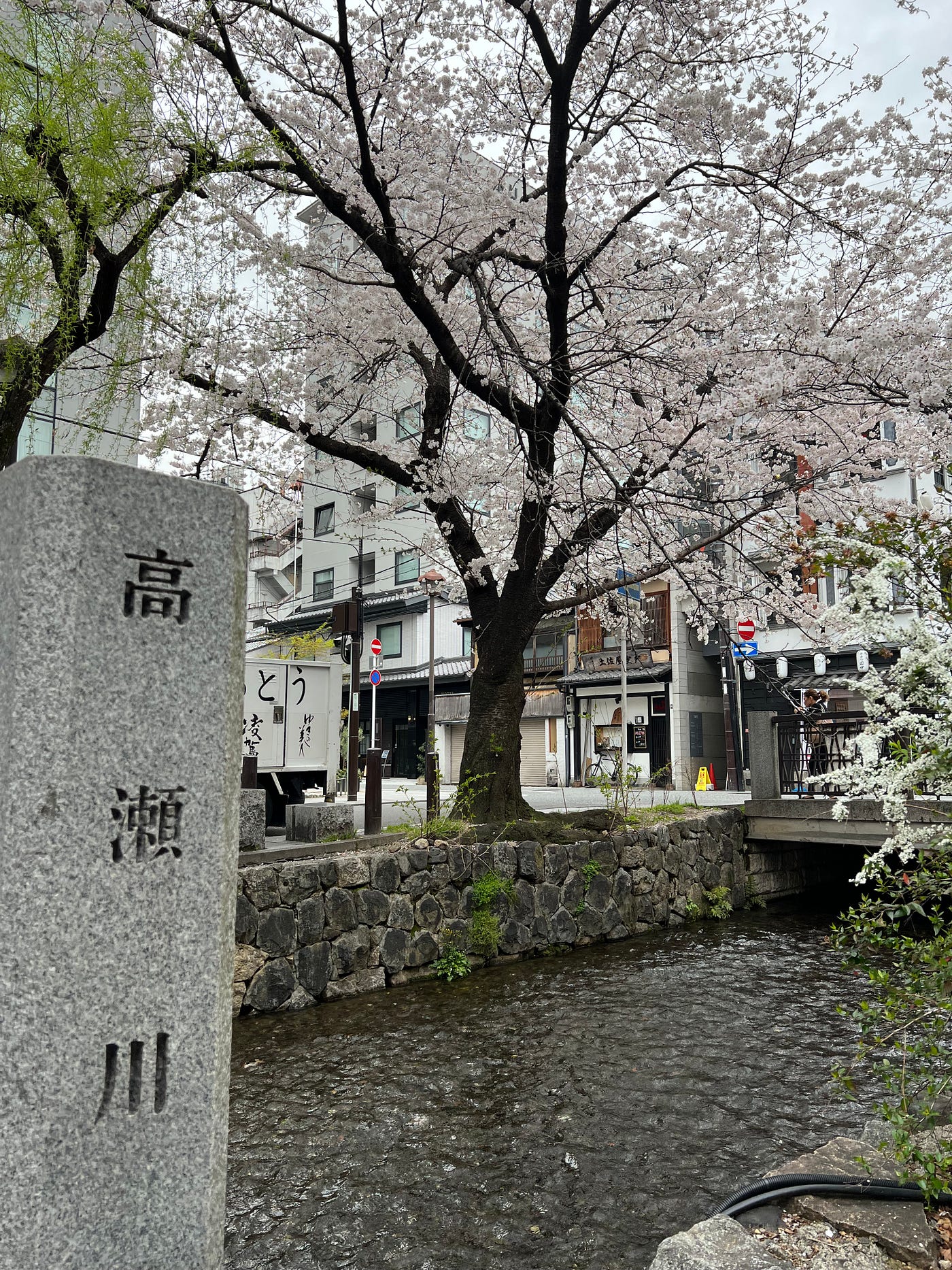
Running gently through this historic area is the Takase River, a narrow yet elegant stream that has been part of Kyoto’s urban landscape since the Edo period. Despite its modest width, the river flows with remarkable clarity, allowing visitors to see far ahead along its course. The shimmering surface seems to reflect the thoughts and emotions of the people who pass by, creating a calm and reflective atmosphere in the middle of the city.
Cherry Blossoms Along the Takase River
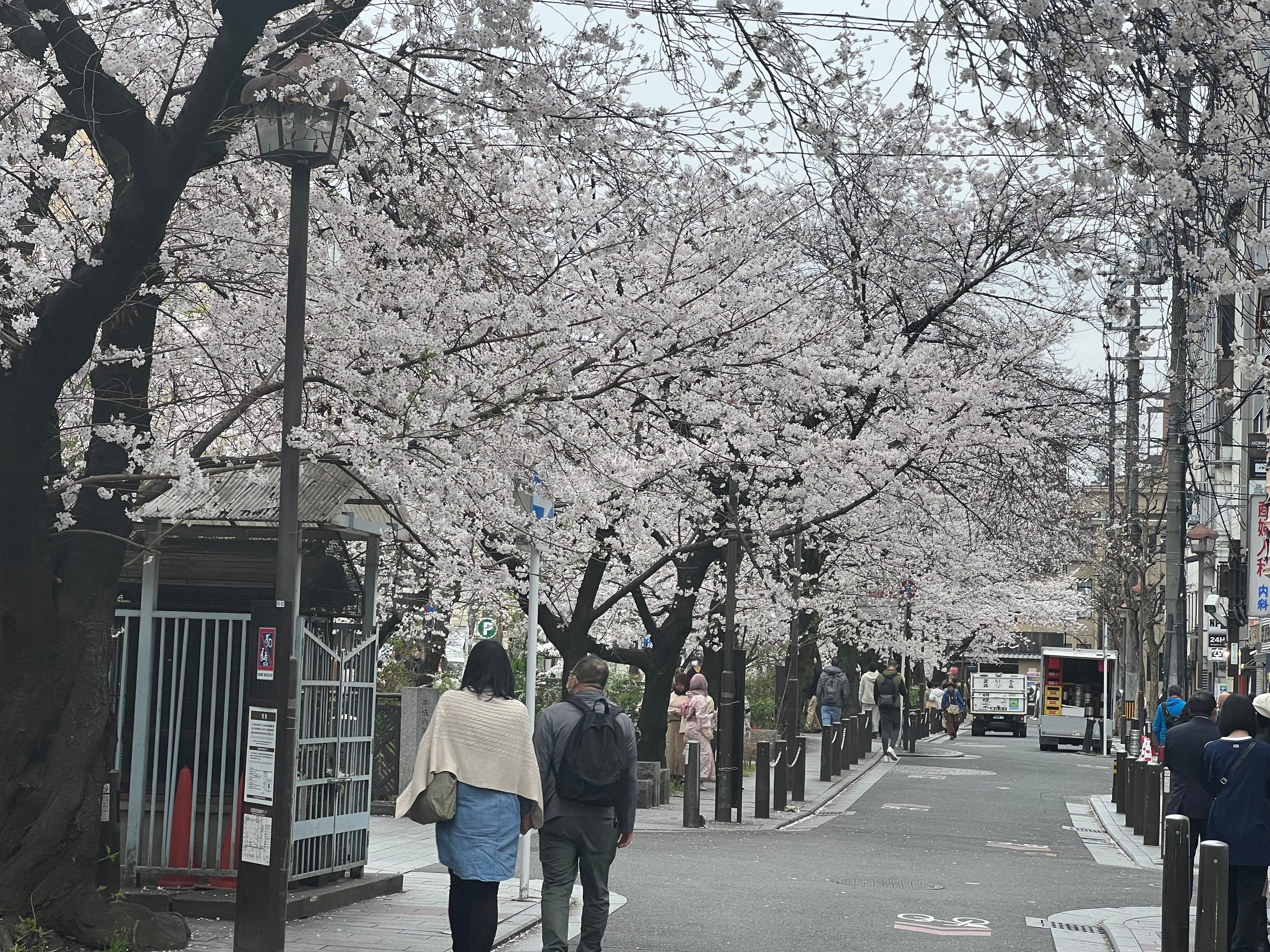
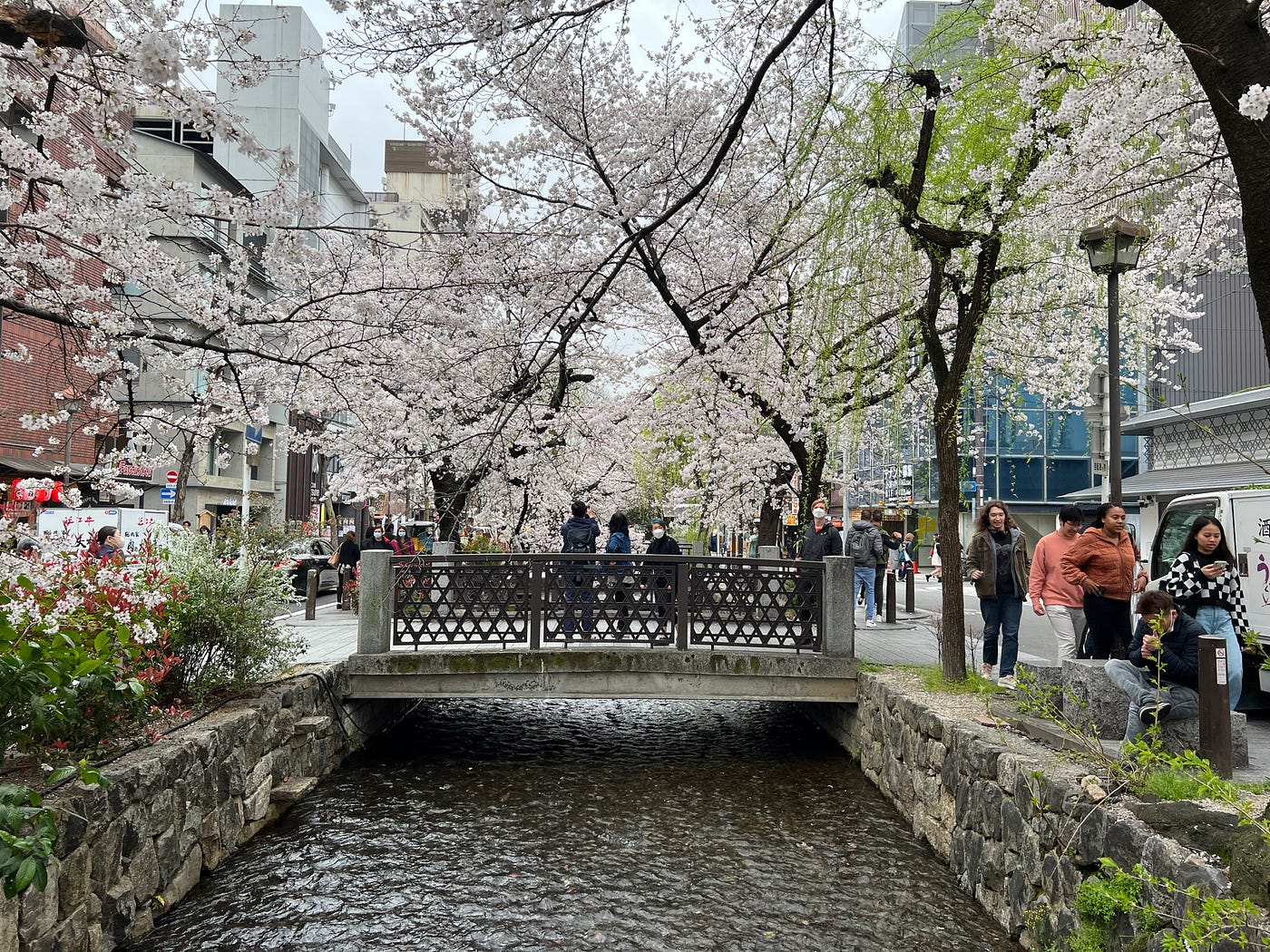
Every spring, cherry blossoms bloom along the banks of the Takase River, transforming the area into one of Kyoto’s most atmospheric walking routes. Large cherry trees stretch their branches over the water, producing delicate white and pale pink blossoms that gently frame the river.
Unlike famous temple gardens, the Takase River offers a linear cherry blossom experience, allowing visitors to enjoy a long, uninterrupted walk beneath the blossoms. The soft colors of the flowers blend naturally with the historic townscape, enveloping the ancient city in a quiet sense of anticipation for spring.
Best Time to Visit and Seasonal Atmosphere
The cherry blossoms along the Takase River usually reach their peak from late March to early April. During this period, the scenery changes noticeably depending on the time of day:
- Early morning: Calm, with very few people and soft natural light
- Afternoon: More visitors, especially on weekends
- Evening: Lanterns and nearby lights reflect on the water, creating a romantic atmosphere
Weekdays are generally less crowded than weekends, making them ideal for visitors who prefer a more peaceful experience.
A Walk Through History and Daily Life
The Takase River was originally developed as a transportation canal, and its banks have long been part of Kyoto’s daily life. Today, the riverside path is perfect for leisurely walks, photography, and quiet reflection. The gentle sound of flowing water and the subtle movement of petals in the breeze create a sense of harmony between nature and city life.
Because the river runs through a dining district, visitors can easily combine cherry blossom viewing with a meal or a short rest at a nearby café. This balance of nature and urban convenience makes the Takase River particularly appealing to travelers who want to experience Kyoto at a relaxed pace.
Access and Practical Information
- Nearest area: Sanjo–Kiyamachi, central Kyoto
- Access: Short walk from Sanjo Station or Kawaramachi Station
- Best season: Late March to early April (cherry blossom season)
- Recommended visit duration: 30–60 minutes
The central location makes it easy to include the Takase River in a half-day or evening walking itinerary.
Tips for Enjoying the Takase River Comfortably
- Visit early in the morning or on weekdays to avoid crowds
- Walk slowly along the river rather than staying in one spot
- Combine the walk with nearby dining areas for a smooth travel flow
Compared to major sightseeing spots, the Takase River remains relatively calm, offering a more personal and intimate cherry blossom experience.
Conclusion
The cherry blossoms of the Takase River represent a quieter side of Kyoto’s spring. With clear flowing water, graceful trees, and a welcoming urban atmosphere, the area gently draws visitors into a dreamlike world where time seems to slow down.
For those who wish to experience Kyoto’s cherry blossoms without overwhelming crowds, the Takase River provides a peaceful and deeply memorable alternative. It is this balance of history, daily life, and natural beauty that makes Kyoto so special—and why so many people, myself included, continue to love this city.


コメントを残す